
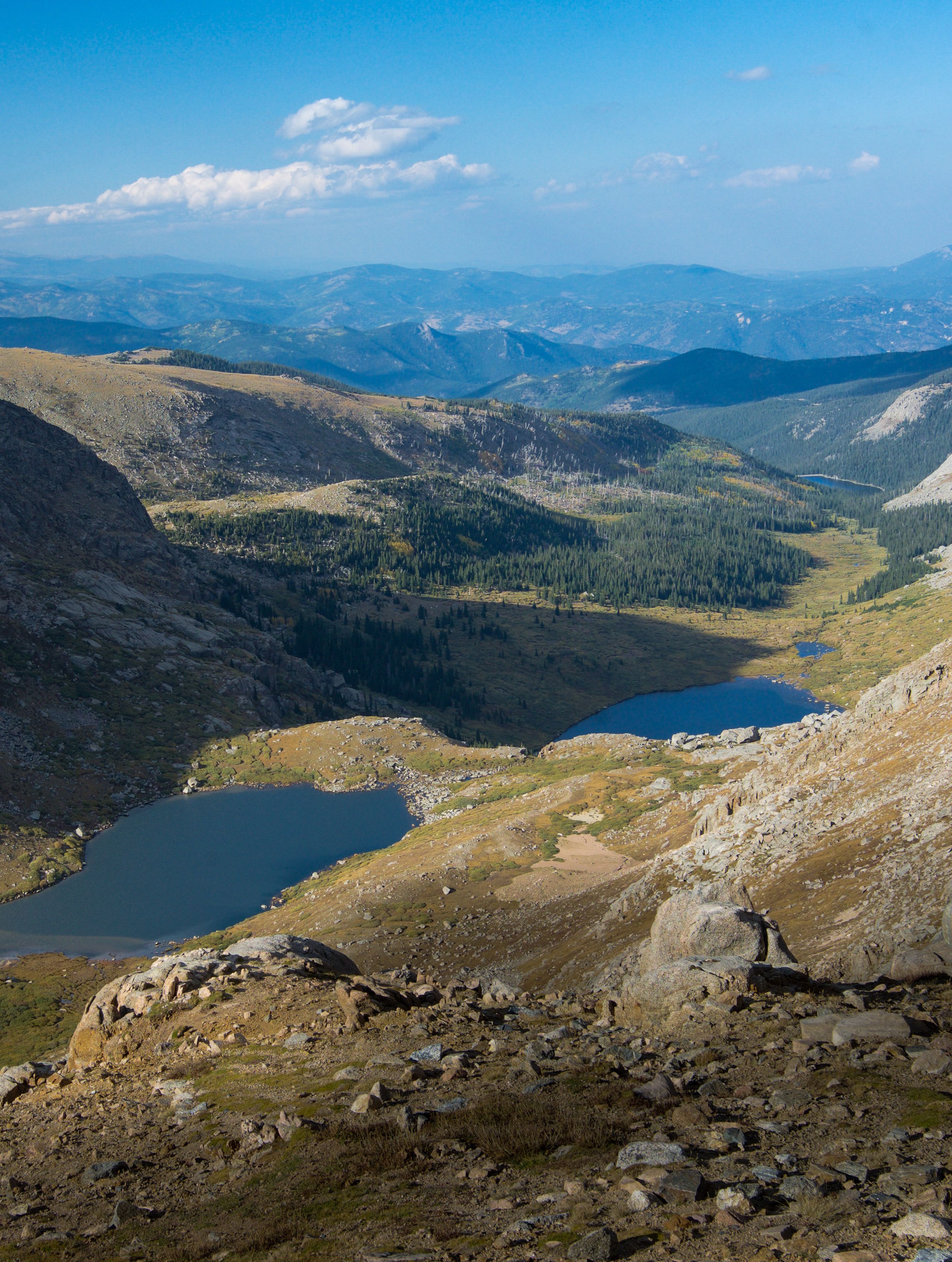
What is the best time of year to visit Colorado?
September is the best single month to visit Colorado. Crowds thin after Labor Day, afternoon thunderstorms fade as the monsoon breaks, the elk rut starts in Estes Park, and aspens turn gold from mid-month onward. June is the best month for long daylight and everything being open. February and March are the best months for skiing on a deep base. April, May and early November are cheapest, but many high mountain roads are still closed.
Best overall
September
Stable weather, thin crowds, elk bugling, and aspen color from mid-month. The month locals take their own vacations.
Best for everything open
Late June
Trail Ridge Road is open, wildflowers are up, rivers are running, and the monsoon has not started yet.
Best for snow
February
Deepest base of the season, before the March storms and the spring break crowds arrive.
Best for your wallet
Early May
Mountain towns are between seasons and empty. Half price lodging. Many high passes still gated.
Colorado is not one destination with a high season. It is at least four different products that swap places on the calendar, and the worst month for one is often the best month for another.
Skiing peaks when hiking is impossible. The rivers run hardest in the weeks when the high country is still buried. September is glorious above treeline and unremarkable in Denver. Picking a month here is really picking which Colorado you want.
Below: all twelve months with real numbers, then the fall color question everybody actually came for.
Month by month
Twelve Months, Honestly
Denver averages come from National Weather Service climate normals. The 9,000-foot column is derived from those figures using the standard mountain lapse rate of roughly four degrees per thousand feet — a good approximation for planning, not a forecast.
January in Colorado
Ski seasonCold, bright and quiet after the holiday rush. The best value inside the core ski season.
Denver average
45°High · low 18°F
At 9,000 ft (approx)
30°High · low 3°F
Crowds
Prices
What is open
- All resorts open with a building base
- Hot springs at their best in the cold
- Denver museums empty on weekdays
- Shelf Road rock climbing near Cañon City
What to watch for
- High passes gated
- I-70 westbound Friday is brutal
- Traction law active during storms
Mid-January is the post-holiday lull — cheaper lodging and shorter lift lines than any other month in season.
February in Colorado
Deepest baseThe month to come if snow quality is the only thing that matters.
Denver average
47°High · low 20°F
At 9,000 ft (approx)
32°High · low 5°F
Crowds
Prices
What is open
- Deepest snowpack of the season, typically
- Nordic and snowshoe trails fully set
- Backcountry huts in prime condition
- Denver's restaurant scene at its least crowded
What to watch for
- Presidents Day week is expensive and packed
- Avalanche danger peaks with the persistent weak layer
- Sunset is still early — plan short days
Colorado's snowpack has a persistent weak layer problem. Read the Colorado Avalanche Information Center forecast before any travel off groomed runs.
March in Colorado
Snowiest monthOften Colorado's snowiest month, and also spring break. Big storms and big lift lines in the same week.
Denver average
55°High · low 27°F
At 9,000 ft (approx)
40°High · low 12°F
Crowds
Prices
What is open
- Biggest storm cycles of the year at many resorts
- Longer days, warmer afternoons
- Spring skiing conditions start appearing late in the month
What to watch for
- Spring break crowds statewide
- I-70 closures during big storms
- Trails below treeline are ice and mud
If your dates are flexible in March, aim for the last week — the crowds thin and the corn snow starts.
April in Colorado
Mud seasonResorts close, trails turn to soup, mountain towns empty out. The cheapest month in Colorado.
Denver average
61°High · low 34°F
At 9,000 ft (approx)
46°High · low 19°F
Crowds
Prices
What is open
- Late-season skiing at a fraction of holiday prices
- Western Slope desert canyons at their best
- Colorado National Monument, Mesa Verde and Dinosaur country ideal
What to watch for
- Many mountain restaurants close for the month
- High passes still gated
- Foothills trails are mud — stay on rock or pavement
Mud season is genuinely cheap. If you want a ski town without the ski town, this is the window.
May in Colorado
ShoulderRunoff starts, the desert is perfect, and the high country is still buried.
Denver average
71°High · low 44°F
At 9,000 ft (approx)
56°High · low 29°F
Crowds
Prices
What is open
- Rafting season begins as snowmelt picks up
- Wildflowers start in the foothills
- Great Sand Dunes with Medano Creek running
- Mesa Verde and the Western Slope at their peak
What to watch for
- Trail Ridge Road usually still closed until late May
- Independence and other high passes gated
- Afternoon storms begin building late in the month
In a low-snow year like 2026, runoff arrives earlier and drops off faster — the big-water rafting window compresses.
June in Colorado
Everything opensLong days, everything opening, and the monsoon has not started yet. Arguably the best access month.
Denver average
82°High · low 53°F
At 9,000 ft (approx)
67°High · low 38°F
Crowds
Prices
What is open
- Trail Ridge Road and high passes open
- Wildflowers moving up the mountains
- Rivers running hard
- Longest daylight of the year
What to watch for
- Reservation systems all active
- Mosquitoes near water at mid-elevations
- Snow lingering on north-facing high trails early in the month
Late June is the sweet spot: everything open, storms not yet daily, and school holidays only just started.
July in Colorado
Monsoon startsWarmest month, biggest crowds, and the afternoon thunderstorm pattern turns daily around mid-month.
Denver average
89°High · low 59°F
At 9,000 ft (approx)
74°High · low 44°F
Crowds
Prices
What is open
- Every trail, pass and byway open
- Wildflowers at treeline
- Festival season statewide
- Alpine lakes finally thawed
What to watch for
- Afternoon lightning above treeline — be down by two
- July 4th weekend is the busiest of summer
- Fire restrictions likely in a drought year
- Wildfire smoke on the Western Slope
Colorado's monsoon generally starts mid-July. Mornings stay clear; the storms build between noon and 3 p.m. almost daily.
August in Colorado
Monsoon peakLike July with slightly thinner crowds and slightly more reliable storms.
Denver average
87°High · low 58°F
At 9,000 ft (approx)
72°High · low 43°F
Crowds
Prices
What is open
- Everything still open
- Warm alpine lake swimming, briefly
- Peak wildflower season above 11,000 feet
- Colorado State Fair in Pueblo
What to watch for
- Daily afternoon storms
- Flash flood risk on burn scars
- Smoke can ruin an otherwise clear forecast
- Fire bans widespread in dry years
Flash flooding on wildfire burn scars is the underrated August hazard. Burned soil sheds water instead of absorbing it.
September in Colorado
Best monthThe best month in Colorado, and it is not close. Stable weather, thin crowds, and aspens.
Denver average
79°High · low 49°F
At 9,000 ft (approx)
64°High · low 34°F
Crowds
Prices
What is open
- Monsoon breaks — stable clear afternoons return
- Aspen color from mid-month at high elevation
- Elk rut in Estes Park at dawn and dusk
- Everything still open before the gates close
What to watch for
- The last two weeks are the hardest lodging dates of the year
- Weekend traffic on color passes is severe
- Nights get genuinely cold above 9,000 feet
The week right after Labor Day is arguably the single best week of the Colorado year — summer access, autumn weather, no crowds.
October in Colorado
Color descendsColor works its way down to the Front Range while the high country starts closing.
Denver average
65°High · low 37°F
At 9,000 ft (approx)
50°High · low 22°F
Crowds
Prices
What is open
- Front Range and foothills color into mid-month
- Empty trails after the third week
- Surprisingly good hiking weather below 9,000 feet
- Cheap mountain lodging late in the month
What to watch for
- Trail Ridge Road typically closes late in the month
- RMNP timed entry ends Oct 13 and Oct 18 in 2026
- First real snow can arrive any time
- Many high byways gate for winter
Late October is mud season two: leaves down, snow not started, and some of the quietest trails of the year.
November in Colorado
In betweenThe quietest month in Colorado. Nothing much is happening, which is the point.
Denver average
53°High · low 26°F
At 9,000 ft (approx)
38°High · low 11°F
Crowds
Prices
What is open
- Resorts start opening on manmade snow
- Denver's cultural calendar picks back up
- Desert Southwest corner of the state is perfect
- Cheapest mountain lodging of the year
What to watch for
- Most high roads closed
- Ski terrain very limited until late in the month
- Short days — sunset before five
If you want empty and cheap and do not need the high country, November is underrated.
December in Colorado
Holiday peakSki season proper begins, and the last two weeks are the most expensive of the year.
Denver average
45°High · low 19°F
At 9,000 ft (approx)
30°High · low 4°F
Crowds
Prices
What is open
- Most resorts fully operating by mid-month
- Holiday markets and light displays in Denver
- Hot springs in the snow
- Reliable early-season snow at high resorts
What to watch for
- Christmas through New Year is the annual price peak
- Shortest days of the year
- I-70 gridlock on holiday weekends
Early December — the first two weeks — is quiet and reasonably priced with most terrain open. The gap before the holidays is the trick.
The September question
Colorado Fall Colors,
By Elevation
When do the aspens change color in Colorado?
Colorado aspens turn by elevation, not by a single statewide date. High passes above 10,000 feet typically peak from mid to late September. Mid-elevation areas between 8,000 and 9,500 feet peak in late September into the first days of October. Front Range foothills and city parks hold color into mid-October. Drought years pull the whole sequence earlier and shorten it — which is the case in 2026.
2026 Aspen Peak Windows
Shifted ~1 week early for droughtThe mechanism is worth understanding, because it explains why the advice changes year to year. Aspens do not turn because of a cold snap. The primary trigger is shortening daylight, which tells the tree to stop producing chlorophyll and reveals the carotenoid pigments underneath. Temperature and water stress modify the timing and the intensity, but they do not drive it.
That is why elevation matters more than the calendar. Higher elevations get colder nights sooner and are more water-stressed, so they turn first, and the color moves downhill at roughly 1,000 feet per four or five days.
2026 has a complication. Colorado finished the winter with statewide snowpack around 61% of median, the lowest reading in the modern snow telemetry record, and much of the Western Slope stayed in extreme or exceptional drought through spring. Drought-stressed aspens turn earlier, can look duller or browner, and drop leaves faster once they turn. We cover what that does to the rest of the summer in the 2026 water year.
The practical adjustment: shift your plans about a week earlier than a normal year, and favor north-facing slopes and drainages with reliable water. A grove above a creek will look dramatically better than one on a dry south-facing hillside a mile away.
Where to go, in order
- Kebler Pass, West Elk Loop. Thirty miles of dirt road through what may be the largest contiguous aspen forest in North America. Peaks late September.
- San Juan Skyway. The best overall fall drive in Colorado, and the reason the last two weeks of September are the hardest lodging dates of the year.
- Maroon Bells. The photograph everyone has seen. Requires a shuttle or parking reservation.
- Kenosha and Guanella passes. The Denver day trips. Both crowded on weekends; go Tuesday.
- Lariat Loop. Holds color latest, into mid-October, and it is thirty minutes from downtown.
All of these are covered in detail on our Colorado scenic byways guide, including which ones are dirt and which close for winter.
How locals actually count it
Colorado Has Five Seasons,
And Two Of Them Are Mud
Ask anyone who lives in a mountain town what season it is and you will get an answer that is not on the calendar.
Winter — late November to early April
Ski season. Resorts open on manmade snow in November and the natural base builds through midwinter. Mountain towns are full, lodging is at its most expensive, and I-70 becomes a weekly bottleneck. Down in Denver it is milder than visitors expect — the city gets bright sun between storms and snow rarely stays on the ground long.
Mud season one — April to mid-May
The resorts close, the snow melts, and the trails turn to soup. Mountain towns empty out, restaurants take their annual break, and some businesses close entirely for a few weeks. It is genuinely cheap and genuinely quiet. If you like a ski town without the ski town, this is the window.
Summer — late May to mid-July
Trail Ridge Road opens, the high passes open, rivers peak with runoff, and wildflowers come up in waves from the foothills to the tundra. Long days, stable mornings. This is Colorado at maximum.
Monsoon — mid-July to early September
Moisture pushes north from the Gulf of California and afternoon thunderstorms go from occasional to near-daily. Mornings stay clear. Afternoons build fast. It is still a great time to be here — you just have to be off the summit by noon. It is also the peak of wildfire and smoke season on the Western Slope.
Mud season two — mid-October to late November
Leaves down, snow not yet reliable, passes closing one by one. The second cheap window, and the last chance at empty trails before winter. Some of the best hiking weather of the year happens in the third week of October, on trails nobody is using.
The thing that surprises people
The Colorado Monsoon
Is Real And It Is Daily
When is monsoon season in Colorado?
Colorado's monsoon season generally runs from mid-July into early September. Moisture pushes north from the Gulf of California and the Pacific, and afternoon thunderstorms shift from occasional to near-daily. Storms typically build between noon and 3 p.m., produce lightning above treeline, and can cause flash flooding in narrow canyons and on wildfire burn scars.
People plan July and August trips because those are the warmest months, then get caught out by a weather pattern nobody warned them about. The important thing is that it is predictable. This is not random bad luck — it is a daily engine you can plan around.
Morning sun heats the ground. Warm air rises up the slopes. It hits cold air aloft, condenses, and builds vertically into a thunderhead. By early afternoon that cell is producing lightning. You can nearly set a watch by it.
Which produces the single most useful rule in Colorado: be off the summit by noon and below treeline by two. That is why fourteener trailheads are full of cars at four in the morning. It is not machismo, it is arithmetic.
Two other monsoon effects worth knowing:
- Flash flooding on burn scars. Burned soil sheds water instead of absorbing it. An ordinary thunderstorm over a burn area can send a debris flow down a drainage that has never flooded in living memory. If a warning is issued for a burn scar above your campsite, leave immediately.
- The monsoon is also what ends fire season. A strong monsoon is genuinely good news for the state. A weak one, in a drought year like this, means fire restrictions stay in place longer.
Our full guide to reading a Colorado mountain day covers the lightning math, altitude and why your phone's forecast stops being accurate above treeline.
Winter
When Is Ski Season
In Colorado?
When is ski season in Colorado?
Colorado's ski season generally runs from late October or November through early April, with a few high-altitude resorts opening earliest and closing latest. February usually offers the deepest base, March brings the biggest storms and the spring break crowds, and the last weeks of the season deliver warm bluebird days on softening snow at a fraction of holiday prices.
The rhythm of a Colorado ski season, in the order it actually happens:
- Late October to November. Opening day, usually on a narrow ribbon of manmade snow. Enthusiasts only.
- Christmas to New Year. The most expensive and most crowded week of the year, by a wide margin. Book months out or avoid entirely.
- January. Cold, quiet, and often excellent. The best value inside the core season.
- February. Deepest base. Reliable conditions. The month to target if snow quality is the priority.
- March. Colorado's snowiest month at many resorts, but also spring break. Big storms and big lift lines in the same week.
- April. Softening snow, sunshine, patio weather and half-empty slopes. The locals' favorite and the tourists' blind spot.
Two practical notes. Buy a multi-resort season pass in spring for the following winter — the price roughly doubles by December. And plan around the I-70 rhythm: westbound Friday afternoon and eastbound Sunday afternoon are the worst blocks of the week. CDOT activates traction and chain restrictions during storms, and the fines escalate sharply if you block the road.
In a low-snow year like 2025–26, resorts lean harder on snowmaking and terrain opens later. Check the specific mountain's open-terrain report rather than the seasonal marketing.
Crowds and money
The Weeks To Avoid,
And The Weeks Nobody Wants
If your dates are flexible, this is the section that saves you the most money and the most standing in line.
The hardest dates of the year
- Christmas through New Year. Mountain lodging at its annual peak. Nothing else comes close.
- The last two weeks of September. Peak aspen color plus perfect weather plus school-free travelers. Harder to book a room in Ouray or Telluride than on the Fourth of July.
- Presidents Day and spring break weeks in March. Lift lines and I-70 at their worst.
- July 4th weekend. Every campground, trailhead and mountain town simultaneously.
The weeks nobody wants, which are quietly great
- Mid-January. Post-holiday lull. Cold, empty, cheap, and often excellent snow.
- Late April to mid-May. Mud season. Half-price mountain lodging. The Western Slope and desert canyons are at their best.
- The week after Labor Day. Summer weather, summer access, and the crowds gone overnight. Arguably the single best week of the year.
- Late October to mid-November. Leaves down, snow not started. Empty trails and surprisingly good hiking weather.
One more scheduling lever most people never use: go midweek. Colorado's crowding is overwhelmingly a weekend phenomenon driven by five million Front Range residents driving west on Saturday. A Tuesday in July at a popular trailhead can be quieter than a Saturday in October. The color is the same.
Keep planning
- Things to do in Colorado — 33 places, filterable by season, plus the 2026 permit and reservation rules.
- Colorado scenic byways — all 26 routes sortable by surface, region and seasonal closure.
- Pack it in, pack it out — camping ethics and fire safety in a drought year.
- Colorado Camping Spots — where to sleep, region by region.
- Independent news coverage — closures, fires and conditions as they happen.
Common questions
Byway Questions,
Answered Plainly
What is the best time of year to visit Colorado?
September is the best single month to visit Colorado. Crowds thin after Labor Day, afternoon thunderstorms fade as the monsoon breaks, the elk rut begins in Estes Park, and aspens turn gold from mid-month onward. June is best for long daylight and full access, February is best for skiing, and April, May and early November are cheapest but with many high roads still closed.
When do the aspens change color in Colorado?
Colorado aspens turn by elevation, not by a single statewide date. High passes above 10,000 feet typically peak from mid to late September. Mid-elevation areas between 8,000 and 9,500 feet peak in late September into the first days of October. Front Range foothills and city parks hold color into mid-October. Colour moves downhill at roughly 1,000 feet every four or five days.
Is Colorado fall color early in 2026?
Yes, expect it about a week earlier than a normal year. Colorado finished the 2025–26 winter with statewide snowpack around 61% of median, the lowest in the modern snow telemetry record, and much of the Western Slope stayed in extreme or exceptional drought. Drought-stressed aspens turn earlier, can look duller, and drop leaves faster once they turn.
When is monsoon season in Colorado?
Colorado's monsoon season generally runs from mid-July into early September. Moisture pushes north from the Gulf of California and the Pacific, and afternoon thunderstorms shift from occasional to near-daily. Storms typically build between noon and 3 p.m., produce lightning above treeline, and can cause flash flooding in narrow canyons and on wildfire burn scars.
When is ski season in Colorado?
Colorado's ski season generally runs from late October or November through early April. February usually offers the deepest base, March brings the biggest storms along with spring break crowds, and April delivers warm bluebird days on softening snow at a fraction of holiday prices. Buy a multi-resort season pass in spring for the following winter — the price roughly doubles by December.
What is the cheapest time to visit Colorado?
Late April through mid-May, and again from mid-October through November. Locals call these mud seasons: the resorts have closed but the summer trails are not ready, or the leaves are down but the snow has not started. Mountain lodging drops sharply, though many restaurants close for a few weeks and most high passes are gated.
When does Trail Ridge Road open?
Trail Ridge Road typically opens in late May and closes to through traffic in late October, with exact dates set by snow conditions each year. It is the highest continuous paved highway in North America at 12,183 feet. During Rocky Mountain National Park's timed entry season you need a reservation to drive it — the standard Timed Entry permit covers it.
What is the weather like in Colorado in summer?
Denver averages highs near 89°F in July and 87°F in August, with lows in the upper 50s. Subtract roughly 4°F per 1,000 feet of elevation gain, so a 9,000-foot mountain town runs about 15°F cooler. From mid-July into early September, expect clear mornings and near-daily afternoon thunderstorms that build between noon and 3 p.m.
How busy is Colorado in September?
Considerably quieter than July and August through the first two weeks, then very busy in the last two. The week immediately after Labor Day is one of the best of the year — summer access with the crowds gone. The final two weeks of September, when aspen color peaks, are among the hardest lodging dates in the state, particularly in Ouray, Telluride and Crested Butte.
What is mud season in Colorado?
Mud season is the local name for the two shoulder periods when mountain towns empty out: roughly April to mid-May after the resorts close and before the trails dry, and mid-October to late November after the leaves drop and before reliable snow. Lodging is at its cheapest, but many restaurants close for a few weeks and high passes are gated.
Get in touch
Advertise With Us,
Or Correct Our Calendar
Opening dates, closures and color timing move every year. If something on this page is wrong for the season you just travelled, tell us.